
Corrective Exercises for Dowager’s Hump in Towson MD
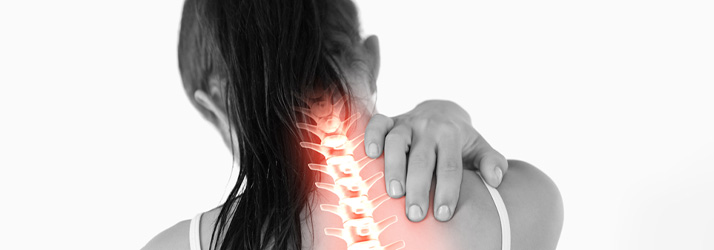
Dowager’s hump—clinically referred to as thoracic kyphosis with cervicothoracic postural collapse—is a progressive postural condition characterized by excessive forward curvature of the upper back and a visible prominence at the base of the neck. While commonly associated with aging, Dowager’s hump is increasingly seen in younger adults due to prolonged screen use, sedentary lifestyles, and poor ergonomic habits.
At Kalkstein Chiropractic in Towson MD, we emphasize that Dowager’s hump is not merely a cosmetic issue. Left unaddressed, it can contribute to chronic neck and upper back pain, headaches, restricted breathing mechanics, shoulder dysfunction, nerve irritation, and long-term degenerative changes. The good news: with targeted corrective exercises, postural retraining, and consistent care, meaningful improvement is possible.
This guide focuses on dense, clinically intentional corrective exercises designed to address the root causes of Dowager’s hump.
What Causes Dowager’s Hump in Towson MD?
Dowager’s hump develops when several biomechanical factors occur simultaneously:
- Prolonged forward head posture
- Excessive thoracic flexion (rounded upper back)
- Weak deep neck flexors
- Weak mid- and lower trapezius muscles
- Overactive/shortened upper trapezius, levator scapulae, and pectoral muscles
- Reduced thoracic spine mobility
- Poor proprioceptive awareness of upright posture
Corrective exercise must therefore focus on mobility where motion is lacking and strength where stability is absent.
Corrective Exercise Principles
Before diving into specific movements, it’s important to understand the goals of a corrective program:
- Restore thoracic extension mobility
- Improve scapular positioning and control
- Strengthen postural stabilizers
- Retrain cervical alignment
- Integrate posture into daily movement
Each exercise below serves a specific biomechanical purpose. Perform them slowly, with control, and with an emphasis on quality over quantity.
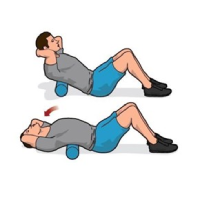
1. Thoracic Extension Over Foam Roller
Purpose: Improve thoracic spine extension and reduce excessive kyphosis.
How to Perform:
- Place a foam roller horizontally across your mid-upper back
- Support your head and neck with your hands
- Keep your hips grounded
- Slowly extend your upper back over the roller without arching your lower back
- Pause briefly at end range, then return to neutral
Prescription: 2–3 sets of 8–12 controlled repetitions
Clinical Notes: Movement should come from the thoracic spine—not the lumbar spine. This exercise restores extension capacity essential for upright posture.
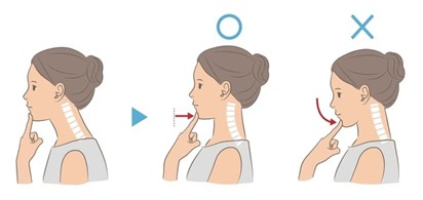
2. Chin Tucks (Deep Neck Flexor Activation)
Purpose: Strengthen deep cervical flexors and reduce forward head posture.
How to Perform:
- Sit or lie with your spine neutral
- Gently draw your chin straight backward (as if making a double chin)
- Hold without tilting the head up or down
- Breathe normally
Prescription: 2–3 sets of 10 repetitions, 5–10 second holds
Clinical Notes: This is not a neck flexion exercise. Subtle control is key. Patients often overuse superficial muscles initially.
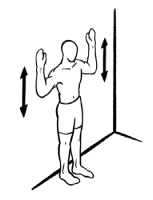
3. Wall Angels
Purpose: Improve scapular mobility, thoracic extension, and postural endurance.
How to Perform:
- Stand with back, head, and hips against a wall
- Maintain a slight chin tuck
- Keep ribs down and core engaged
- Slowly raise arms overhead while maintaining wall contact
Prescription: 2–3 sets of 8–10 repetitions
Clinical Notes: Loss of wall contact indicates mobility restrictions or compensation patterns that must be addressed.
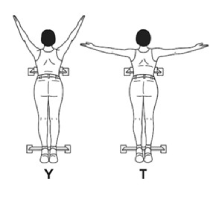
4. Prone Y and T Raises
Purpose: Strengthen lower trapezius and mid-scapular stabilizers.
How to Perform:
- Lie face down on a bench or mat
- For Y raises: arms overhead at ~45° angle
- For T raises: arms directly out to the sides
- Lift arms by squeezing shoulder blades downward and together
- Keep neck neutral
Prescription: 2–3 sets of 10–12 repetitions per position
Clinical Notes: Avoid upper trapezius dominance. Think “long neck, heavy shoulders.”
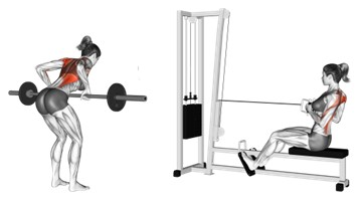
5. Seated or Standing Rows (Resistance Band or Cable)
Purpose: Reinforce scapular retraction and postural strength.
How to Perform:
- Begin with arms extended
- Pull elbows back while keeping shoulders down
- Pause briefly at full retraction
- Return slowly
Prescription: 3 sets of 10–15 repetitions
Clinical Notes: Proper rowing mechanics counteract habitual forward shoulder posture.
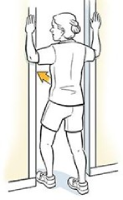
6. Pectoral Stretch (Doorway or Corner Stretch)
Purpose: Reduce anterior shoulder and chest tightness contributing to rounded posture.
How to Perform:
- Place forearms on a doorway or wall
- Step forward slightly
- Keep ribs down and neck neutral
- Hold stretch without pain
Prescription: 2–3 sets, 30–45 second holds
Clinical Notes: Overstretching without strengthening will not correct posture—this must be paired with posterior chain activation.
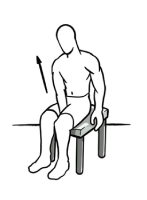
7. Scapular Depression Holds
Purpose: Reduce upper trapezius dominance and reinforce proper shoulder positioning.
How to Perform:
- Sit or stand tall
- Gently pull shoulders down away from ears
- Hold without shrugging or leaning
Prescription: 2–3 sets of 10-second holds, 6–10 repetitions.
Consistency and Progression
Corrective exercises must be performed consistently—ideally 4–6 days per week. Early improvements often include reduced tension and improved awareness. Structural and visual changes take time and commitment.
Progressions may include:
- Increased time under tension
- Added resistance
- Integration into functional movement patterns
Chiropractic Care and Dowager’s Hump
Corrective exercise is most effective when combined with chiropractic adjustments, soft tissue therapy, and postural education. Joint restrictions, muscle imbalances, and nervous system inefficiencies often limit exercise effectiveness when addressed in isolation.
At Kalkstein Chiropractic, we create individualized corrective programs tailored to posture, lifestyle, and functional demands.
When to Seek Professional Help
If Dowager’s hump is accompanied by:
- Persistent pain
- Numbness or tingling
- Headaches
- Balance issues
- History of osteoporosis or spinal fractures
A professional evaluation is essential before beginning any exercise program.
Final Thoughts
Dowager’s hump is not an inevitable consequence of aging or modern life. With targeted corrective exercises, proper guidance, and consistent care, posture can improve, pain can decrease, and long-term spinal health can be protected.
If you’re ready to address posture at its root, our team at Kalkstein Chiropractic is here to help.
Schedule an evaluation today and take the first step toward better posture and better health.

OFFICE HOURS
Monday
7:00am - 5:00pm
Tuesday
7:00am - 5:00pm
Wednesday
7:00am - 5:00pm
Thursday
7:00am - 5:00pm
Friday
7:00am - 12:00pm
Saturday & Sunday
Closed
Kalkstein Chiropractic
200 E Joppa Rd #300
Towson, MD 21286